Payload Question

Beninbeta

Well-known member
Hey @testerdahl, on the livestream we talked about payload that that you cannot increase it, mainly because of the frame. I totally understand all of that.

My question, and maybe it would be cool to get Sheldon Brown on a video, he loves talking about this stuff, isn't the frame on all Tacomas the same?

If so how does the Trailhunter have 1700 pounds of payload? I know they are beefing up several of the components of hybrids, but they never mentioned the frame being one of those.

My thinking is that Trailhunter will be at least 500 pounds heavier than a gas model. Batter, electric motor, steal skids, rock rails, ARB steel bumper, larger tires/wheels, bigger brakes, roof rack and that weird bed accessory. Normally you'd expect the payload to go down in that instance right? Anyway, if the frame is the same, then it would be plausible to upgrade other components to increase payload in this case, maybe?

Just something that popped in my head. I'd also love to know from Toyota how they typically identify and handle items that would required a QC hold and what that process generally looks like. I know that they cannot discuss the specific issues, but the process would be interesting to learn about. How do they complete updates/replace parts at a rail yard?

Again, thanks for joining last night!
 
Hey @testerdahl, on the livestream we talked about payload that that you cannot increase it, mainly because of the frame. I totally understand all of that.

My question, and maybe it would be cool to get Sheldon Brown on a video, he loves talking about this stuff, isn't the frame on all Tacomas the same?

If so how does the Trailhunter have 1700 pounds of payload? I know they are beefing up several of the components of hybrids, but they never mentioned the frame being one of those.

My thinking is that Trailhunter will be at least 500 pounds heavier than a gas model. Batter, electric motor, steal skids, rock rails, ARB steel bumper, larger tires/wheels, bigger brakes, roof rack and that weird bed accessory. Normally you'd expect the payload to go down in that instance right? Anyway, if the frame is the same, then it would be plausible to upgrade other components to increase payload in this case, maybe?

Just something that popped in my head. I'd also love to know from Toyota how they typically identify and handle items that would required a QC hold and what that process generally looks like. I know that they cannot discuss the specific issues, but the process would be interesting to learn about. How do they complete updates/replace parts at a rail yard?

Again, thanks for joining last night!
https://realtruck.com/blog/how-to-increase-the-payload-capacity-of-a-truck/

Can You Increase Payload Capacity?​

While we’ve already covered this point numerous times, let's establish it as fact. NEVER, under any circumstances, can you exceed your vehicle’s payload capacity. Regardless of the modifications to the suspension or chassis, exceeding your vehicle’s payload beyond manufacturer-specified values isn’t just unsafe but illegal!

Rather than modifying to increase payload capacity, you should always modify your pickup to improve hauling performance. But remember, just because your pickup can now handle its max payload better doesn’t mean you can exceed it!
 
https://realtruck.com/blog/how-to-increase-the-payload-capacity-of-a-truck/

Can You Increase Payload Capacity?​

While we’ve already covered this point numerous times, let's establish it as fact. NEVER, under any circumstances, can you exceed your vehicle’s payload capacity. Regardless of the modifications to the suspension or chassis, exceeding your vehicle’s payload beyond manufacturer-specified values isn’t just unsafe but illegal!

Rather than modifying to increase payload capacity, you should always modify your pickup to improve hauling performance. But remember, just because your pickup can now handle its max payload better doesn’t mean you can exceed it!
Totally understand that point, this is more academic, like how are they getting that payload on a much heavier vehicle? I understand no matter what you do to your vehicle, you cannot legally go beyond your payload sticker. So I'm not trying to say anyone should do that, just that it's plausible, like Mythbusters, that it could be done. You can plausibly fish with dynamite as well, but that is illegal too. I'm mostly interested in how they are getting those numbers on Trailhunter.
 
Hey @testerdahl, on the livestream we talked about payload that that you cannot increase it, mainly because of the frame. I totally understand all of that.

My question, and maybe it would be cool to get Sheldon Brown on a video, he loves talking about this stuff, isn't the frame on all Tacomas the same?

If so how does the Trailhunter have 1700 pounds of payload? I know they are beefing up several of the components of hybrids, but they never mentioned the frame being one of those.

My thinking is that Trailhunter will be at least 500 pounds heavier than a gas model. Batter, electric motor, steal skids, rock rails, ARB steel bumper, larger tires/wheels, bigger brakes, roof rack and that weird bed accessory. Normally you'd expect the payload to go down in that instance right? Anyway, if the frame is the same, then it would be plausible to upgrade other components to increase payload in this case, maybe?

Just something that popped in my head. I'd also love to know from Toyota how they typically identify and handle items that would required a QC hold and what that process generally looks like. I know that they cannot discuss the specific issues, but the process would be interesting to learn about. How do they complete updates/replace parts at a rail yard?

Again, thanks for joining last night!
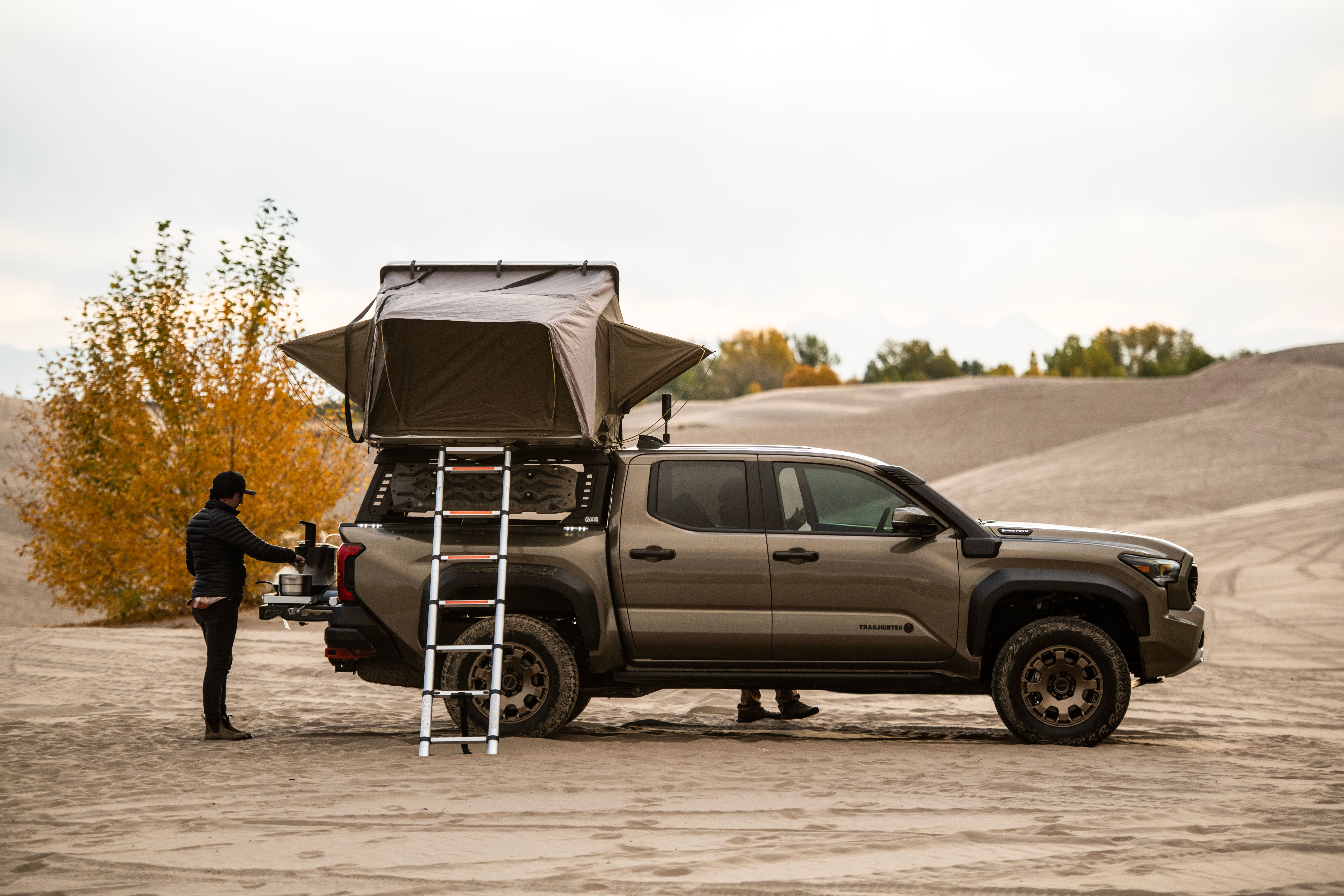
I was wondering about the 1,200 lbs comment you made last night more so than the TrailHunter to be honest.

My question is: where are you getting both numbers?
 
The 1200 is directly from the lucky people who have purchased the TRD Off-road premium already. They shared pics of the payload sticker. Sheldon mentioned the Trialhunter had 1700 pounds of payload in a couple of interviews. I'll see if I can dig that up.
 
XOverland has a Trailhunter and a series on YouTube about it


That being said as it's not clear if the trailhunter has that payload or one of the iforcemax model, but 1709 is the number that get mentioned. It's been pretty confusing thus far for sure.
 
XOverland has a Trailhunter and a series on YouTube about it


That being said as it's not clear if the trailhunter has that payload or one of the iforcemax model, but 1709 is the number that get mentioned. It's been pretty confusing thus far for sure.
Engineers always talk in max payload terms.

I can’t imagine Toyota is using two different frames. That is unheard of.
 
There's more than the frame and accessories when it comes to payload. A big issue with many of the high-end off-roaders is the suspension design. Softer suspension for off-roading doesn't lend itself well to hauling heavy stuff. For instance, Raptor has very high towing but very low payload.

Considering the Trailhunter has a completely different set-up, would that be enough to raise it? Don't know.
 
I guess we have to wait until the hybrids release to find out. 1270 is the highest number I have seen from any posts so far I think it was an SR5, but the payload seems to be the same on higher and lower trim off roads and that's strange too.
 
I guess we have to wait until the hybrids release to find out. 1270 is the highest number I have seen from any posts so far I think it was an SR5, but the payload seems to be the same on higher and lower trim off roads and that's strange too.
It sure seems like it is better to wait and not order a truck right away anymore. Far too many unknowns.
 
Couldn't a manufacturer achieve more payload by toying with and increasing the licensing weight of the vehicle? I'm not sure how that works in mid-size but I know it's why the 3/4 ton Rams have the lowest payload of all of the 3/4 tons by quite the margin, RAM refuses to license over 10,000 lb. Whereas GM and Ford will go over giving more payload.

Could it be that they do this to the hybrid versions or the pro and trail hunter specifically?

I also think it's possible that Sheldon is constantly referencing the max payload of the Tacoma but I do remember him specifying the trail hunter at a moment in a video.
 
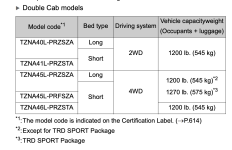
This is from the manual:
Gas model: 45 is the off-road model. It's just funny to look at is it 1200 or 1270?? LOL The door sticker is the what you need to go off of obviously, but it is interesting if you looked at your manual what goes where?

Screenshot 2024-03-02 at 1.53.01 PM.png
 
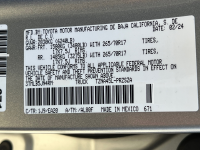
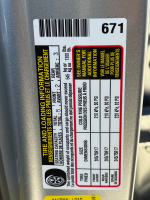
Here are the stickers from pretty much exactly the truck I'm buying: Interesting is the GVWR is 6240 and the Truck weighs 4200 apparently. Not sure where that all fits together, but that is the on the ground information I have. NOTE: You can also see the "full size spare" in the second photo not being the same as the other tires. It's not even the same brand of tire, but it's a temp so I guess that was what was on sale.

Lots of images of pretty much every angle in this post here: https://www.tacoma4g.com/forum/threads/bought-a-2024-tacoma-off-road-premium-today.2044/

1709413972778.png

1709414017503.png
 
Yep, Toyota is really screwing the pooch on this one. With the Tacoma buyer, payload is so much more important than towing for sure. All their press release info stated "up to 1709" for both the hybrid and non-hybrid versions. If the Pro and Trailhunter are Hybrid only, then where is the 1709 in the standard motor?
 
It'll be interesting to see what those numbers will be. I could end up being that the Hybrid Off-road ends up with the highest payload at 1709 and Trailhunter is like 1200. Even in that case though, Since Trailhunter has most of the upgrades a lot of people would want, that's still pretty good, But i the frames are the same then the biggest difference between gas/hybrid would be the hybrid, 18 inch wheels and the brakes. I know there are other upgrades to some of the components to handle the additional weight and stress from the hybrid, but if they otherwise the same, if the had added the bigger brakes and wheels to the gas model would the payload have been like 1500?

As a less experienced person in this area I would also think the GVWR-weight of the vehicle would be close to 1200, but it's more like 2000. That's a big difference. So it's just strange.
 
Back
Top